March 2026- 'School subjects transformed through VR/AR 'Teacher’s training – Curaçao
Güncelleme tarihi: 15 Nis
Day 1 – A Warm Caribbean Welcome (Monday 02/03) The Teacher Curaçao team warmly welcomed all delegations at Radulphus College. The morning began with a colorful International Breakfast, where each country shared traditional delicacies. The buffet became a meeting point of cultures, sparking conversations and strengthening bonds among participants.
The Curaçao group then prepared a heartfelt welcome performance featuring: ● Traditional cultural dances ● Native music and singing ● A joyful celebration of Caribbean identity
During the school tour, teachers explored how Augmented Reality (AR) and Virtual Reality (VR) are already integrated into classrooms. The visit highlighted how immersive technologies support interdisciplinary teaching and student engagement.
In the afternoon, a guided city tour by Trevor Bakhuis offered insight into Willemstad’s urban development and environmental characteristics. The guide explained how natural phenomena — such as rare tornadoes — influence infrastructure and daily life on the island.
The evening concluded with a visit to Otrobanda’s vibrant street art scene, showcasing Curaçao’s modern cultural expression.
Day 2 – Cultural Heritage & Identity (Tuesday 03/03) Tuesday was dedicated to exploring the historical and cultural roots of Curaçao. Participants visited the Jewish Cultural Historical Museum, located next to the historic Mikvé Israel-Emanuel Synagogue, the oldest continuously used synagogue in the Americas. The visit revealed how religious diversity and migration shaped the island’s identity and social development.
Afterward, the group explored the Kura Hulanda Museum, a world-class anthropological museum presenting: ● The origins of humankind ● West African empires ● The transatlantic slave trade ● Mesopotamian artifacts ● Antillean art and heritage Both museums demonstrated how technology is used to collect, preserve, research, and interpret tangible and intangible heritage.
A key reflection emerged: While digital tools support understanding, VR and AR could be more thoroughly integrated to enhance immersive storytelling, stimulate multiple senses, and foster deeper engagement for future generations. The cultural day concluded with a visit to the Curaçao Liqueur Distillery Chobolobo, where participants learned about the production of the famous Blue Curaçao liqueur — a blend of tradition, craftsmanship, and innovation. We also learned how important the sustainable development of large companies such as the one we visited is.
Day 3 – Innovation in Education (Wednesday 04/03) Wednesday focused on academic collaboration and technological advancement at Radulphus College. The day began with a series of lectures that explored the benefits of interdisciplinary teaching through VR and AR technologies, as well as the ways in which immersive tools can help overcome language barriers and support knowledge acquisition. Particular emphasis was placed on how these technologies can address cognitive challenges in diverse classrooms. Participants took part in hands-on AR/VR workshops, which provided opportunities to: ● Present project progress ● Exchange best practices ● Develop strategies for integrating AR and VR tools into partner schools ● Explore practical classroom applications for future implementation
The discussions highlighted the broader impact of immersive learning environments, showing how they can promote inclusive education, support multilingual classrooms, break down cognitive barriers, and significantly increase student motivation and participation.
This was followed by hands-on AR/VR workshops, where participants had the opportunity to present their project progress, exchange best practices, and collaborate on developing strategies for integrating these technologies into their schools. The sessions also focused on practical classroom applications planned for implementation in 2026. Throughout the workshops, teachers worked together on lesson plans that combined sustainability, cultural awareness, and interdisciplinary learning approaches.
Day 4 – Culture, Environment & Creative Learning (Thursday 05/03) Thursday was dedicated to cultural immersion, environmental awareness, and creative expression. The day began with a Papiamento language class, offering participants a meaningful introduction to the local language and strengthening their connection to the Caribbean cultural context. The lectures explored key themes related to innovation in education, including:
● The benefits of interdisciplinary teaching through VR/AR ● Overcoming language barriers through immersive technologies ● Facilitating knowledge acquisition and addressing cognitive challenges The discussions highlighted how immersive technologies can: ● Promote inclusive education ● Support multilingual classrooms ● Break cognitive barriers ● Increase student motivation and participation
Later in the day, participants attended a workshop on environmental issues in the Caribbean. The session addressed several pressing challenges, including the spread of invasive seaweed such as sargassum, which affects marine ecosystems and tourism, as well as broader concerns like climate change, rising sea levels, coral reef degradation, plastic pollution, and water scarcity. These discussions encouraged participants to reflect on how such environmental issues can be incorporated into educational practices, particularly through interdisciplinary and project-based learning. The workshop on environmental issues in the Caribbean focused on key challenges affecting the region, such as: ● The spread of invasive seaweed (e.g., sargassum), impacting marine ecosystems and tourism ● Climate change and rising sea levels ● Coral reef degradation ● Plastic pollution and waste management issues ● Water scarcity in certain island areas
The day also included a music learning session, where participants explored elements of Caribbean musical traditions. Through interactive activities, they experienced how music can function as a powerful educational tool, fostering creativity, cultural understanding, and active student engagement.
Day 5 – Reflection & Certification (Friday 06/03) The final day began with a collective reflection session, during which participants shared their experiences and insights gained throughout the mobility. The discussion focused on the development of cultural awareness, the role of digital transformation in education, and the importance of preserving cultural heritage through innovative teaching practices.
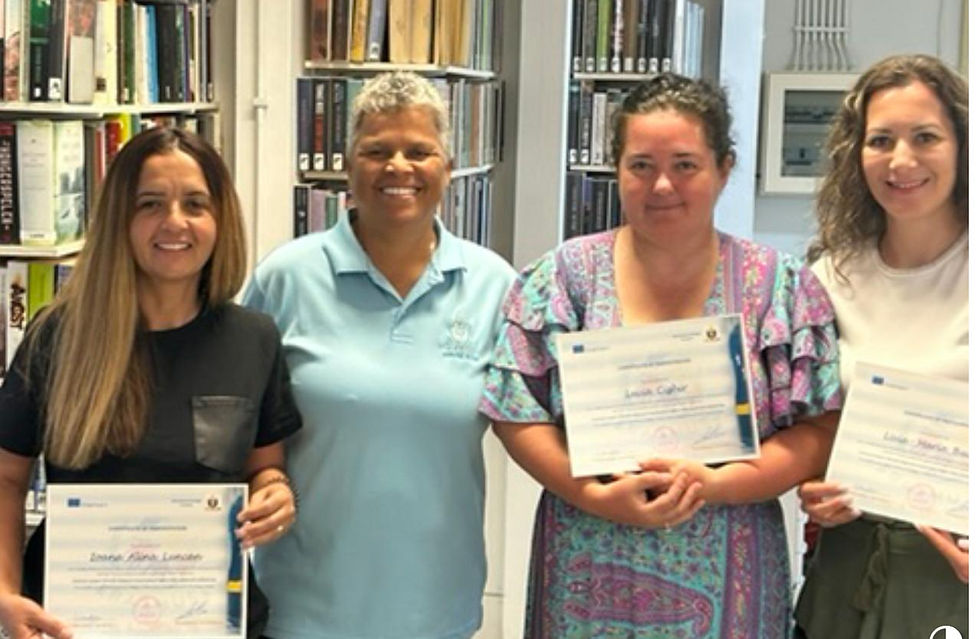
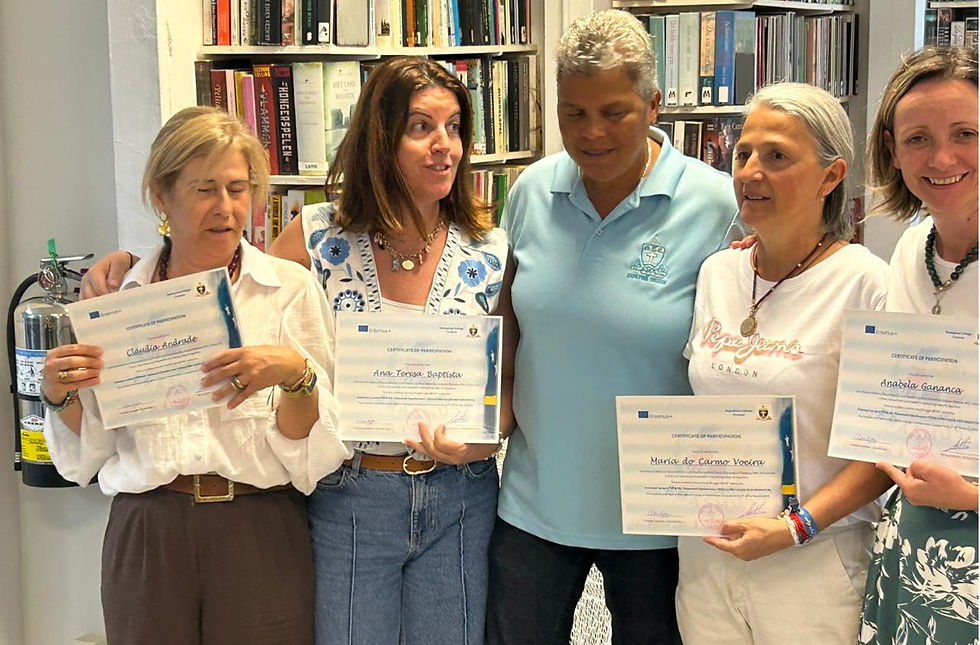
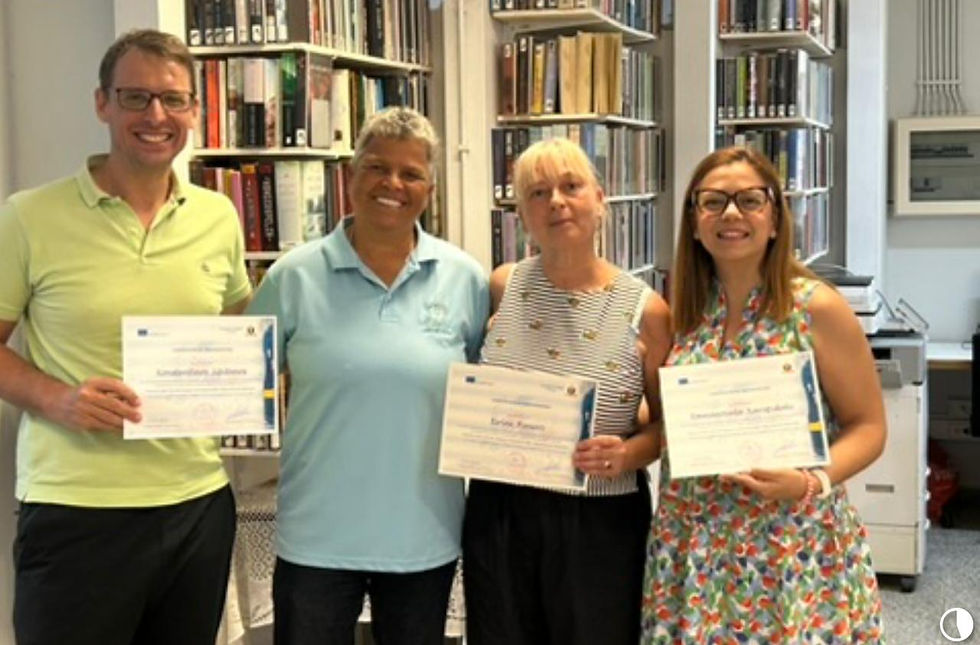
This was followed by a certification ceremony, where participants were recognized for their dedication, active participation, and collaborative spirit. The mobility concluded with a farewell lunch at Komedor Krioyo, where participants enjoyed Caribbean cuisine while exchanging emotional goodbyes and expressing their commitment to future cooperation.
A Week to Remember
The Curaçao mobility demonstrated that: Culture builds bridges Technology enhances understanding Collaboration shapes the future By combining historical consciousness with immersive digital tools, the project continues to redefine what classrooms can become.
Participating Organizations & Countries
● Lycée Professionnel Lumina Sophie Batelière (France)
● Colegiul National “Onisifor Ghibu” (Romania)
● Stichting RK Schoolbestuur (Curaçao)
● Dijital Girisimci Yenilikci Eğitimciler Dernegi (Turkey)
● Escola Básica e Secundária Dr. Luís Maurílio da Silva Dantas (Portugal)
● Peiramatiko Gymnasio Rethymnou Panepistimiou Kritis (Greece)





Yorumlar